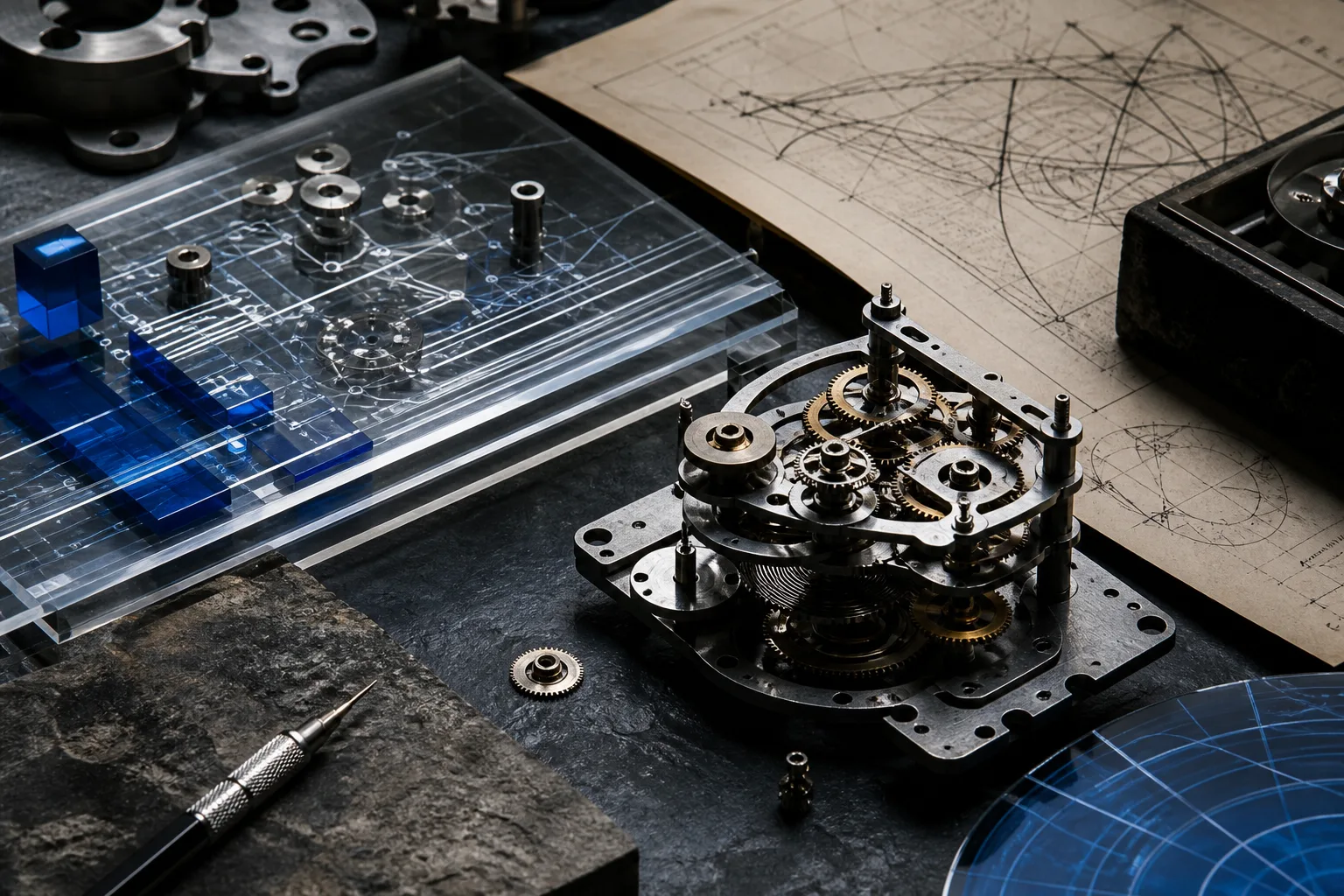
Many tools are defined by their physical form. A hammer remains suited to a narrow family of actions. A general-purpose computer is different because instructions can reorganise what the same machine does. It can calculate, communicate, simulate, edit an image or coordinate another system without becoming a new physical device each time.
Instructions separate capability from hardware
Programmability creates a layer between the machine and the task. Hardware provides operations for storing, moving and transforming information. Software combines those operations into procedures that serve a particular purpose.
This separation allows improvement to travel quickly. A corrected program can be distributed without replacing every device. New tools can share the same storage, display and network. The flexibility also creates dependence: one error or insecure component may affect many different activities built on the same foundation.
Representation turns the world into operations
Computers act on representations. Text, sound, images and measurements are encoded into forms the machine can process. Choosing a representation determines which distinctions remain visible and which are simplified.
The computer does not understand a record merely because it can transform it. Meaning comes from the relationship between the encoded data, the real condition and the human purpose behind the operation. Good systems make that relationship explicit enough for users to recognise limitations and errors.
Generality requires dependable layers
Modern computing depends on layers of abstraction: processors, operating systems, libraries, protocols and applications. Each layer lets people work without rebuilding everything below it. Reliability comes from stable interfaces, testing and maintenance across the stack.
Generality can hide complexity until a failure crosses a boundary. A small update may affect tools that its author never knew existed. Compatibility and cautious change are therefore part of computing progress, not obstacles to it.
General-purpose computing changed tools from fixed mechanisms into evolving arrangements of information and instruction. That flexibility supports extraordinary creativity, but it also makes software quality, security and stewardship part of the infrastructure of everyday life.